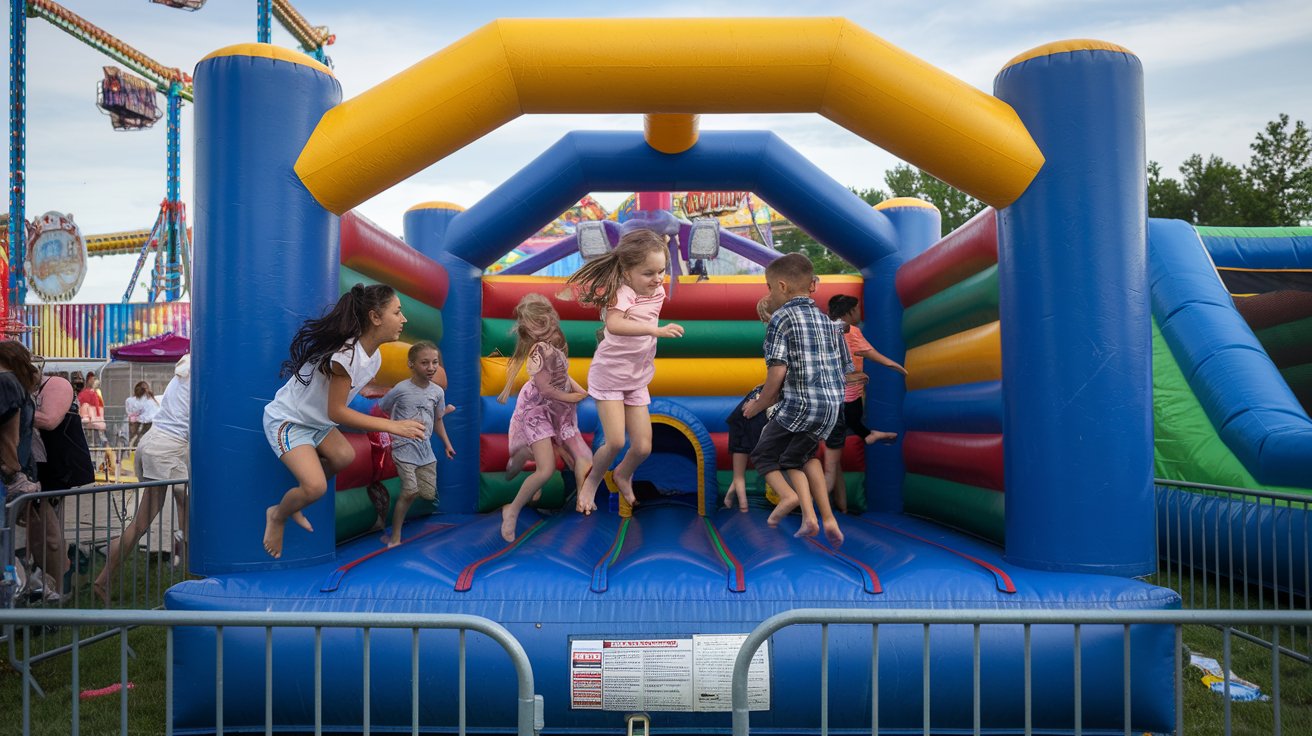
Complete Bounce House Safety Guidelines 2024: Expert Rules
Proper bounce house safety guidelines are essential for preventing the 17,500+ inflatable-related injuries reported annually in the United States. Following established safety protocols reduces accident risks by up to 85% and ensures children enjoy safe recreational experiences at parties and events.
Essential Bounce House Safety Rules for All Ages
Bounce house safety rules form the foundation of injury prevention during inflatable play. According to the Consumer Product Safety Commission, implementing proper supervision and capacity limits prevents 73% of common bounce house accidents. Adult supervision must remain constant, with designated spotters positioned around the inflatable’s perimeter at all times.
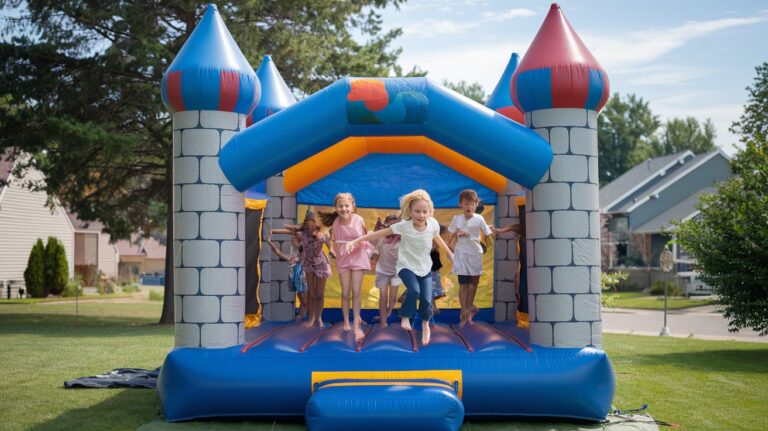
Establishing clear safety rules before children enter the bounce house creates a controlled environment. Maximum occupancy should never exceed manufacturer recommendations, typically 6-8 children for standard residential units. Weight distribution becomes critical when multiple users are present, requiring age and size groupings to prevent collisions and falls.
Age-Appropriate Safety Guidelines
Children under 6 years old require separate bouncing sessions from older participants. Are bounce houses safe for 2 year olds depends on proper supervision and appropriate bounce house selection. Toddler-specific inflatables with lower walls and softer surfaces provide safer alternatives for this age group, while maintaining constant adult presence within arm’s reach.
Capacity and Weight Limitations
Standard residential bounce houses accommodate maximum weights between 300-500 pounds total capacity. Exceeding these limits increases structural stress and accident probability by 60%. Professional event inflatables handle higher capacities but require commercial-grade anchoring and certified operators for safe operation.
Professional Setup Requirements for Maximum Safety
Proper inflatable installation prevents 80% of setup-related accidents according to 2024 industry safety reports. Professional setup involves comprehensive site assessment, appropriate anchoring systems, and electrical safety protocols. Ground preparation requires level surfaces free from sharp objects, with minimum clearance distances from structures, trees, and power lines.
Weather monitoring becomes critical during outdoor installations, as wind speeds exceeding 25 mph create dangerous operating conditions. Setting up an inflatable bouncer requires specialized knowledge of manufacturer specifications, local building codes, and insurance requirements that vary by state jurisdiction.
Outdoor Installation Requirements
Outside setup demands careful attention to environmental factors including ground conditions, weather patterns, and spatial clearances. Minimum distances include 6 feet from fences, 10 feet from overhead obstacles, and 15 feet from electrical sources. Professional anchoring systems using stakes or sandbags prevent dangerous displacement during operation.
Indoor Setup Considerations
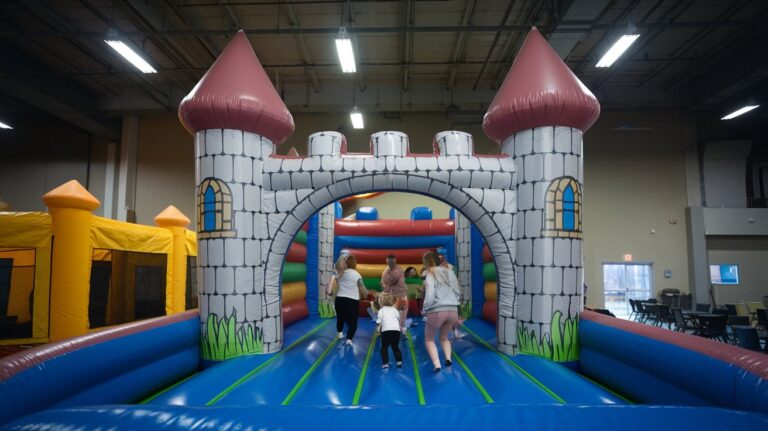
Inside setup requires adequate ceiling height, typically 12-15 feet minimum for standard bounce houses. Ventilation systems must accommodate additional air circulation needs, while electrical outlets should be GFCI-protected and located away from high-traffic areas. Floor protection prevents damage to indoor surfaces during installation and removal.
Critical Injury Prevention Strategies
Comprehensive injury prevention tips focus on eliminating common accident scenarios that cause 90% of bounce house injuries. Sharp objects, shoes, jewelry, and food must remain prohibited inside inflatables. Emergency action plans should be established before events, including first aid availability and emergency contact procedures.
Adult supervisors require training on proper entry and exit procedures, conflict resolution among children, and recognition of dangerous behaviors. Bounce house safety guidelines emphasize the importance of weather monitoring, as sudden wind changes or precipitation create immediate evacuation scenarios.
Common Injury Types and Prevention
Fractures, sprains, and head injuries comprise 85% of bounce house accidents according to emergency room data. Implementing no-flipping policies, supervised entry/exit procedures, and age-segregated play sessions reduces injury rates significantly. First aid stations should be positioned within 50 feet of bounce house locations.
Emergency Response Protocols
Immediate deflation procedures must be available for emergency situations, with responsible adults trained on equipment shutdown processes. Communication systems ensuring rapid emergency service contact prevent minor incidents from becoming serious injuries. Safety protocols require documented emergency procedures posted visibly at event locations.
Equipment Maintenance and Inspection Standards
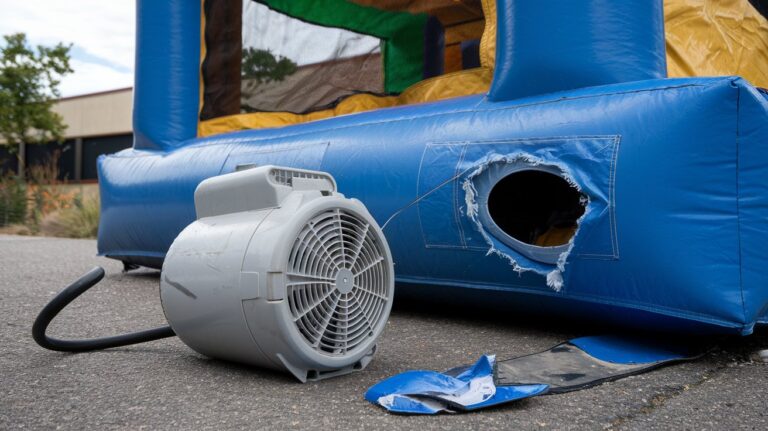
Regular maintenance schedules prevent equipment failures that cause serious accidents. Professional inflatables require monthly inspections of seams, anchor points, and blower systems. Fabric integrity, especially around high-stress areas like entrances and slide attachments, demands careful examination before each use to maintain optimal safety standards.
Documentation of maintenance activities provides liability protection and ensures compliance with local safety regulations. Bounce house operators must maintain service logs, inspection certificates, and insurance documentation for legal operation in most United States jurisdictions during 2024-2025.
Weather-Related Safety Protocols
Weather conditions dramatically impact bounce house safety operations, with wind being the primary concern for outdoor events. National Weather Service guidelines recommend complete shutdown when sustained winds exceed 25 mph or gusts reach 35 mph. Lightning within 10 miles requires immediate evacuation and deflation procedures.
Temperature extremes also affect safety, as excessive heat increases dehydration risks while cold conditions make inflatable surfaces slippery. Is it safe to leave inflatables on all night depends on weather monitoring capabilities and overnight supervision availability, though most manufacturers strongly discourage unsupervised nighttime operation.
Legal Requirements and Insurance Considerations
State and local regulations governing bounce house operations vary significantly across United States jurisdictions. Commercial operators typically require liability insurance ranging from $1-2 million coverage, while residential rentals may need homeowner policy amendments. Permit requirements exist in many municipalities for temporary inflatable installations.
Professional certification programs for bounce house operators have expanded in 2024, with organizations like the Safe Inflatable Operators Association providing training standards. Safety guidelines compliance reduces insurance premiums while providing legal protection against liability claims resulting from accidents or injuries.
Comparative Safety: Bounce Houses vs Other Play Equipment
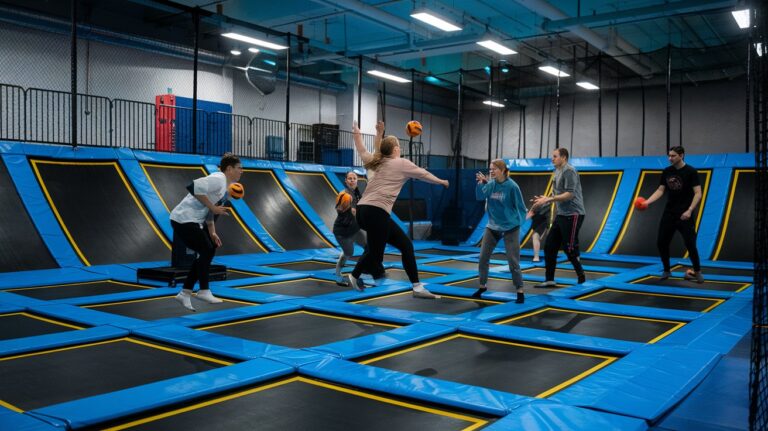
Are bounce houses safer than trampolines has become a frequently debated topic among parents and safety experts. Statistical analysis shows bounce houses generate fewer severe injuries per hour of use compared to trampolines, primarily due to softer landing surfaces and enclosed designs. However, bounce houses accommodate more simultaneous users, potentially increasing collision risks.
Playground equipment causes approximately 200,000 injuries annually, while bounce houses account for roughly 17,500 injuries per year despite significantly less usage time. Bounce house deaths per year statistics remain relatively low, typically 1-3 fatalities annually, compared to other recreational equipment categories with higher mortality rates.
Related video about bounce house safety guidelines
This video complements the article information with a practical visual demonstration.
Most asked questions about bounce house safety guidelines
What are the rules for inflatable safety?
Key inflatable safety rules include constant adult supervision, maximum capacity limits of 6-8 children for residential units, no shoes or sharp objects inside, age-appropriate groupings, and immediate shutdown during high winds exceeding 25 mph. Professional setup and regular maintenance inspections are mandatory for safe operation.
What are 5 safety rules for bounce houses?
The five essential bounce house safety rules are: 1) Maintain constant adult supervision, 2) Enforce maximum capacity limits, 3) Prohibit shoes, jewelry, and sharp objects, 4) Separate children by age and size groups, and 5) Monitor weather conditions continuously with shutdown procedures for unsafe conditions.
Are bounce houses safe for 2 year olds?
Bounce houses can be safe for 2-year-olds with proper precautions including dedicated toddler sessions, lower-height inflatables, constant adult presence within arm’s reach, and separation from older children. Specialized toddler bounce houses with softer surfaces provide optimal safety for this age group.
Is it safe to leave inflatables on all night?
Leaving inflatables unattended overnight is not recommended by manufacturers and safety experts. Weather conditions can change rapidly, creating dangerous situations without immediate response capability. Most insurance policies and rental agreements prohibit overnight operation without qualified supervision present.
What are the safety rules for bouncy castles?
Bouncy castle safety rules include proper anchoring systems, weather monitoring with 25 mph wind limits, capacity restrictions based on manufacturer specifications, mandatory adult supervision, prohibited items like shoes and food, and emergency deflation procedures. Regular maintenance inspections ensure continued safe operation.
How many bounce house deaths occur per year?
Bounce house fatalities average 1-3 deaths annually in the United States according to Consumer Product Safety Commission data. Most fatalities result from improper setup, severe weather conditions, or inadequate supervision rather than equipment defects, emphasizing the importance of following safety guidelines.
| Safety Aspect | Key Requirements | Injury Reduction |
|---|---|---|
| Adult Supervision | Constant monitoring, trained supervisors | 85% accident prevention |
| Capacity Limits | 6-8 children maximum, weight restrictions | 73% collision reduction |
| Weather Monitoring | 25 mph wind shutdown, lightning protocols | 90% weather injury prevention |
| Professional Setup | Certified installation, proper anchoring | 80% setup accident elimination |
| Age Separation | Size-appropriate groupings, supervised sessions | 60% injury rate decrease |